


Welcome to this edition of the Weekly Political Compass from Teneo’s political risk advisory team.
This week, we are taking a closer look at the results of Japan’s Upper House elections. Meanwhile, President Marcos will meet with U.S. President Trump to secure a lower tariff rate for the Philippines, negotiations will continue to try to avert 30% tariffs on Mexican imports that are non-compliant with the United States-Mexico-Canada Agreement (USMCA), and tensions mount between Brazil and the U.S. Elsewhere, a new cabinet will be unveiled in Poland, problems continue to grow for Greece’s government, the South African National Assembly will vote on a key funding bill, and Ghanian parliament will be presented with a mid-year budget review.
Global Snapshot
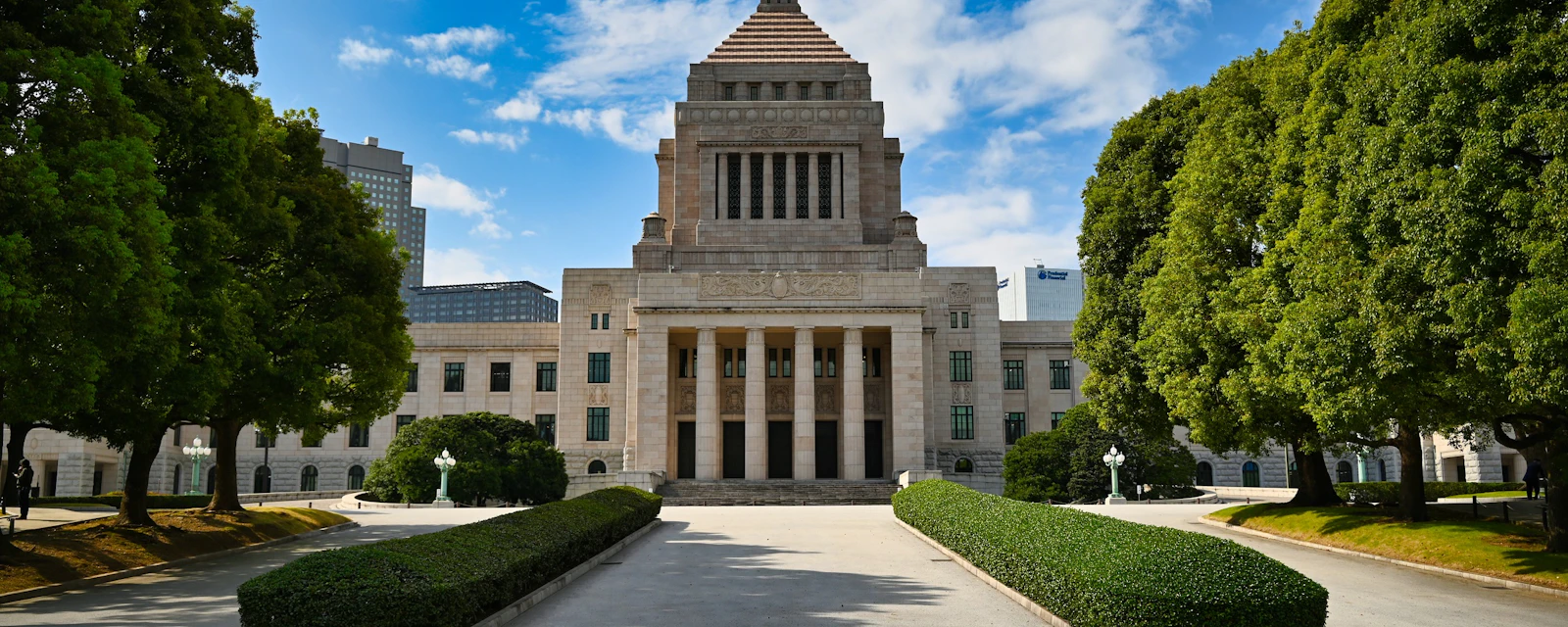
Following the unprecedented results of Japan’s Upper House election on 20 July, in this edition we ask our Japan analysis lead James Brady to look ahead.
Why are the results of this election significant?
Japanese politics has moved into uncharted territory after the LDP-Komeito narrowly lost its majority in the Upper House. The result creates an unprecedented situation of a ‘double-minority’ government without a majority in either chamber of the Diet. Shigeru Ishiba will attempt to stay on as prime minister, but he could face a rebellion within his party after two consecutive electoral setbacks. The three largest opposition parties have downplayed the possibility of joining the coalition, though neither the Democratic Party for the People or Ishin-no-kai seemed to rule it out entirely.
What are the implications?
Besides near-term instability, the outcome points to future pressure on government spending, borrowing and bond yields, while the loss of political capital and the rise of domestic right-wing populism in the election may narrow the space for the government to make concessions in negotiations with the U.S. on trade and other matters.
What to Watch
ASIA-PACIFIC
U.S./China
China’s spy agency warned on Friday that foreign spy agencies had attempted to “steal” rare earth-related items from China, threatening China’s national security. The public statement by China’s Ministry of State Security said an unnamed country had sought to bypass Chinese export controls by forging labels, falsifying cargo manifests, and transhipping products through third countries. Separately, China’s monthly trade data showed that exports of rare-earth magnet soared in June after falling sharply in May, reflecting the U.S.-China agreement reached in London that caused Beijing to unlock export approvals.
India/China
India’s premier policy think-tank, the National Institution for Transforming India (NITI Aayog), has reportedly recommended easing foreign direct investment (FDI) restrictions to allow Chinese firms to acquire up to 24% equity in Indian companies without prior security clearance. This marks a significant departure from the stringent curbs imposed after the 2020 border clashes in Ladakh, which had nearly frozen Chinese investment inflows. The proposal aims to reverse the sharp decline in FDI from China, which fell to just USD 353mn in the last fiscal year from a peak of USD 43.9 bn in 2020-21. However, it remains under review by key ministries and the prime minister’s office, amid concerns about national security and strategic sectors. At the Shanghai Cooperation Organisation summit, External Affairs Minister S. Jaishankar emphasized that India-China ties must remain bilateral, indirectly signaling wariness of third-party involvement from actors like Russia or Pakistan. Meanwhile, Prime Minister Narendra Modi’s upcoming visit on 25-26 July to the Maldives reflects New Delhi’s effort to counterbalance growing Chinese influence in the Indian Ocean region. Modi is likely to revive the earlier rollover of a USD 50mn Maldivian treasury bill and other lines of credits.
Philippines
President Ferdinand Marcos Jr. will meet this week with U.S. President Donald Trump to secure a tariff rate lower than the 20% that was announced two weeks ago. Marcos will likely emphasize the long-standing defense relationship between the two countries, including how he has staked his political capital on a pro-Western foreign policy stance since taking office in 2022. Failure to secure a tariff rate that is measurably lower than that of Indonesia’s 19% would be a domestic political setback for Marcos.
EUROPE
Russia-Ukraine
Russian and Ukrainian delegations are reportedly planning a third round of bilateral ceasefire talks in Turkey in the second half of this week. The previous two rounds—held on 16 May and 2 June—resulted in large-scale prisoner swaps and an exchange of memorandums outlining ceasefire terms. A breakthrough in resolving the conflict remains unlikely, as the Kremlin continues to insist on maximalist territorial and political demands that effectively amount to Ukraine’s capitulation. However, Moscow is eager to project a willingness to engage in diplomacy, particularly amid growing pressure from the Trump administration in the U.S.
Greece
The crisis over widespread agricultural subsidy fraud continues to unfold, with the government advancing a broad parliamentary inquiry designed to demonstrate that the scandal stems from systemic weaknesses inherited from past administrations, rather than misconduct by current officials. Polling by Real Polls for Protagon.gr shows the scandal is beginning to erode public support: New Democracy’s voter intention fell from 27% in June to 23% in July. Notably, the undecided voter share rose from 15.4% to 20.4%, suggesting growing disillusionment, while mainstream opposition remains stagnant and fringe parties gain marginal traction.
Poland
This week, Prime Minister Donald Tusk is expected to unveil his reshuffled and slimmed-down cabinet. The one-week delay—at the request of Szymon Holownia, speaker of the lower chamber of parliament and leader of the junior coalition partner Poland2050 (PL2050)—exposed internal rifts and sparked speculation about a possible withdrawal of PL2050 from the government. While tensions appear to have been contained, the risk of cabinet instability will remain considerable ahead of the 2027 general elections, particularly given the government’s limited prospects for implementing structural reforms and its constrained fiscal space for new spending.
LATIN AMERICA
Brazil
The U.S. government’s revocation of a Brazilian Supreme Court judge’s visa on 18 July brings back the possibility of retaliation. Both Trump’s allegations of a “witch hunt” in Brazil against former president Jair Bolsonaro and Brazil’s decision to make social media platforms liable for illegal content implicate Brazil’s Supreme Court (STF), likely explaining the decision. Last week, Brazil gave several signs that it preferred to negotiate with the Trump administration on its threat of 50% tariffs rather than retaliate. President Lula was adamant that Brazil sought to renew its traditional strong ties with the U.S., but could not accept interference in domestic affairs. Given the recent escalation of tensions and the reluctance of the U.S. to engage in bilateral negotiations, the Brazilian government is now considering a retaliatory response despite much opposition from business sectors.
Mexico
Government negotiators are expected to continue talks with U.S. authorities this week in a bid to avert 30% tariffs on Mexican imports that are not compliant with the United States-Mexico-Canada Agreement (USMCA); if no deal is reached, the tariffs would take effect on 1 August. Although the market reaction to the new tariff threat has been largely muted and President Claudia Sheinbaum has expressed confidence that a deal will be reached, Trump’s dissatisfaction with the Mexican government’s efforts to rein in drug cartels means that talks are not purely trade related. Sheinbaum’s assertion last week that Mexico simply needed to explain better the steps it has taken on the security front suggests that she may be underestimating U.S. determination to tackle political collusion with cartels. Trump on 16 July referred to the “tremendous grip” of cartels over Mexican politicians, perhaps in reference to the latest allegations that put Adan Augusto Lopez, one of the leading figures in the governing National Regeneration Movement (Morena), under the spotlight over his alleged cartel links.
AFRICA
South Africa
On Wednesday, 23 July, the National Assembly is due to vote on the Appropriations Bill. The vote will fuel fresh uncertainty over whether South Africa’s FY 2025/26 budget can be finalized by end-July, without which funding would drop to 10% of 2024/25 funding levels. Following the cabinet crisis within the government of national unity (GNU), the Democratic Alliance (DA) has threatened to vote against at least two departmental budgets. However, legal opinions suggest that failure to pass individual votes would scupper the overall appropriations bill. The ANC will thus need to secure support from the DA or from other parties to secure majorities for individual departmental budgets and ensure the appropriations vote goes ahead. This signals another week of budget brinkmanship and GNU instability.
Ghana
Finance Minister Dr. Cassiel Ato Forson will present the mid-year budget review to parliament on 24 July. The minister is expected to detail progress on revenue collection, public expenditures, and debt servicing in the first six months of 2025, and to propose adjustments for the remainder of the year in light of prevailing economic conditions. The briefing will also provide updates on macroeconomic indicators such as inflation and exchange rate stability, as Ghana continues to implement its three-year International Monetary Fund (IMF)-supported program, which is expected to end in May 2026.